What Niagara Falls sounds like from the water
The part of the boat ride nobody photographs and everybody remembers. Why the noise arrives through your chest, and why it is the thing that makes the ride worth the queue.
 By Michael Thompson, Niagara Falls boat tour specialist and local guide
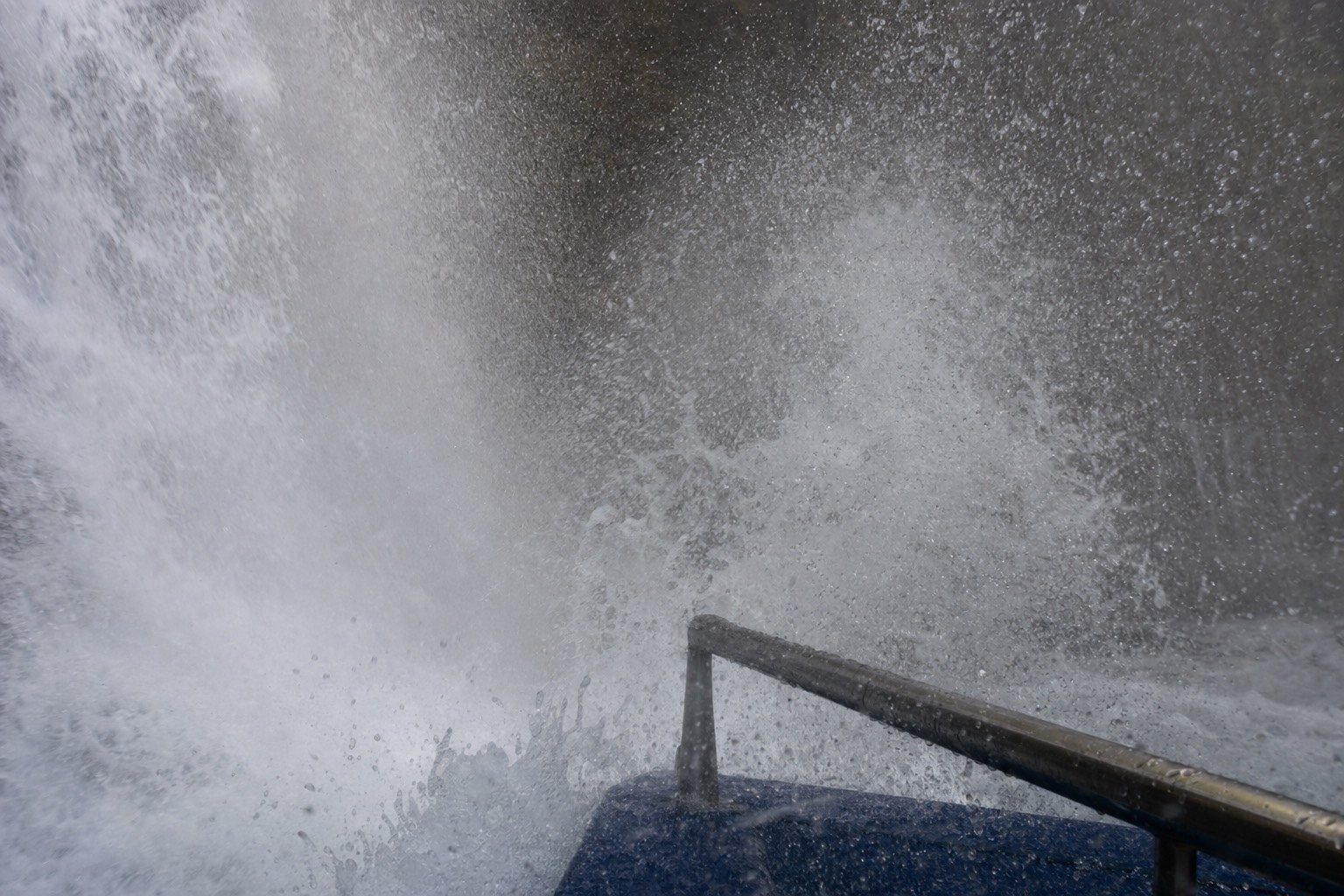
Every account of the Niagara boat ride talks about getting wet. Almost none of them mention the noise, which is strange, because the water dries off within the hour and the sound is the thing people are still describing years later.
Match the experience to your comfort needs first. A guided package adds land attractions but cannot guarantee a dry or quiet boat ride.
Booking choice. Maid of the Mist, Cave of the Winds and the Observation Tower in one guided American-side itinerary. Explore USA boat, Cave & hotel pickup
It is not loud in the way you expect
A rock concert is loud. A jet engine is loud. Those are sounds that reach a threshold and then hurt.
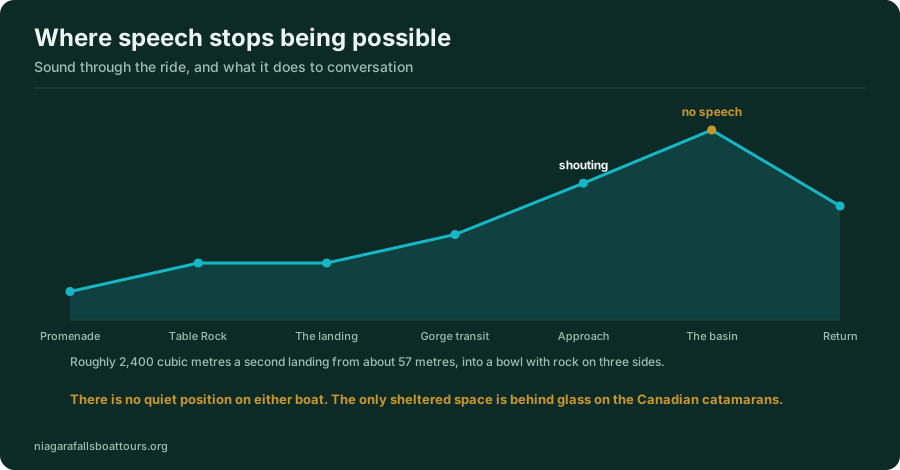
The Horseshoe basin is different in kind. Roughly 2,400 cubic metres of water a second is landing from about 57 metres up, according to Niagara Parks' published figures, and what that produces is not a note or a roar so much as a pressure. It arrives through your sternum. Conversation stops being possible, not because you cannot hear over it, but because the air is moving too much to carry a voice two feet.
People describe it as being inside weather. That is about right.
| Where you are | What you hear |
|---|---|
| The promenade above | A constant distant rush, easily talked over |
| Table Rock, at the crestline | Loud, still conversational |
| The landing, before boarding | Background roar, ordinary |
| Transit up the gorge | Engine noise over a rising hiss |
| Approaching the Horseshoe | The hiss becomes a physical wall |
| Inside the basin | No speech; sound arrives through the body |
| Behind the falls, in the tunnels | Loud, echoing, but bearable |
Why the transition is so abrupt
The boat does not fade into the noise. It turns into the basin, and within about fifteen seconds the entire acoustic environment changes.
The reason is the shape of the place. A horseshoe is an amphitheatre, and the water falls into a bowl with rock on three sides. Sound that would dissipate over open water instead reflects, folds back and accumulates. You are not standing near a loud thing; you are standing inside a resonating chamber with the source directly overhead.
The same geometry does the spray. Air circulates violently in that bowl, which is why the water arrives sideways from a direction that reverses every few seconds rather than falling on you from above. Our getting wet guide covers what that means for what you should be wearing.
It is why the ride works and photographs do not
This is the honest explanation for something that puzzles people: why an attraction that is twenty minutes long, mostly ordinary, and thoroughly documented online still lands the way it does.
A photograph transmits the visual and nothing else. Standing under it you get the sound, the pressure, the wind, the cold, the inability to see the top, and the loss of speech, all at once, for four or five minutes. None of that survives a screen, which is why every visitor account reaches for the same inadequate words.
| What the falls transmit | Survives a photograph? |
|---|---|
| The look of the water | Yes, completely |
| The scale against the boat | Partly |
| The sound through your chest | No |
| The moving air | No |
| Spray from every direction | No |
| Not being able to see the top | No |
| The cold | No |
Our post on what twenty minutes at the base is actually like goes minute by minute through the whole thing.
The practical consequence
Two things follow from this, and both are worth planning for.
Small children. The noise, not the water, is what upsets under-fours. Ear defenders cost very little, almost nobody brings them, and they remove the one part of the experience that genuinely distresses toddlers. Our family guide covers ages and reactions.
Anyone sensitive to sensory load. There is no quiet position on either boat. The rail, the back, the lower deck: all of them are inside the same acoustic bowl. The only sheltered option anywhere is the enclosed space behind glass on the Canadian catamarans, which our accessibility guide discusses as a genuine alternative rather than a consolation.
If the noise is a hard constraint, Journey Behind the Falls is loud but bearable, is elevator-served, and runs year-round. It is the better choice for anyone who wants proximity without the assault.
What it does to the twenty minutes
| Stage of the ride | Can you speak? | What you notice |
|---|---|---|
| Leaving the landing | Normally | Engine noise, gulls |
| Transit up the gorge | Normally | A rising hiss under the engine |
| Past the American Falls | Raised voice | The hiss becomes the dominant sound |
| Approach to the Horseshoe | Shouting only | Pressure builds; people stop talking unprompted |
| Inside the basin | No | Sound through the chest; nobody attempts speech |
| Turning for home | Shouting only | Laughter, mostly |
| Back at the landing | Normally | Ears feel oddly padded for a minute |
That last row is worth mentioning because it surprises people. The sensation of muffled hearing afterwards is short-lived and ordinary, the same effect as leaving a loud room. It passes within minutes.
Where else you can hear it
Not from the promenade, which is the surprise. From Table Rock the falls are loud in an ordinary way, the way a motorway is loud. You have to be underneath.
The two places that deliver it are the boat and, on the American side, the Hurricane Deck at Cave of the Winds, which is arguably more intense because the water is landing directly on you rather than reaching you across a gap. Niagara Falls Tourism lists what the Canadian operator offers, and our comparison page covers which bank suits which visitor.
Questions about the noise
How loud is the Niagara Falls boat ride?
Loud enough that speech becomes impossible inside the Horseshoe basin, and the sound arrives physically through your chest rather than only through your ears. It lasts about four to five minutes of the twenty-minute ride.
Can you hear the guide on the boat?
Only on the way out and the way back. Inside the basin the falls are considerably louder than any public address system, so any commentary happens before and after rather than during.
Is the noise frightening for children?
It is the part that upsets under-fours, more than the water. Ear defenders solve it cheaply and almost nobody brings them. Children over about five tend to find the whole thing exhilarating.
Is there a quieter part of the boat?
Not on the open decks; the whole vessel sits inside the same acoustic bowl. The only sheltered position anywhere is the enclosed space behind glass on the Canadian catamarans.
Can you hear the falls from the hotel?
From close to the gorge, yes, as a constant distant rush. It is nothing like the experience from the water, which requires being underneath the drop rather than near it.
Choose your Niagara day
General editorial starting point; confirm dates, route and personal requirements.
USA boat, Cave & hotel pickup
Have a travel date in mind? Check this itinerary before arranging separate admissions. Maid of the Mist, Cave of the Winds and the Observation Tower in one guided American-side itinerary.
About 4 hours, plus pickup up to an hour before. Pickup in Niagara Falls, NY, not Buffalo or NYC. English; shared tour. Boat and Cave operations are seasonal; winter substitutes differ. Food is extra. Confirm access needs with the operator.
Choose a date to see Viator scheduled departures. Final availability and price are confirmed on Viator.
Choose only the details that matter. Unanswered fields keep this general guidance; a choice can rule out a package.
| USA boat, Cave & hotel pickup | Maid of the Mist, Cave of the Winds and the Observation Tower in one guided American-side itinerary. About 4 hours, plus pickup up to an hour before. Pickup in Niagara Falls, NY, not Buffalo or NYC. English; shared tour. Boat and Cave operations are seasonal; winter substitutes differ. Food is extra. Confirm access needs with the operator. |
|---|---|
| Canadian walking tour: boat, Journey & Skylon | Journey Behind the Falls, Skylon Tower and a seasonal Niagara City Cruises ride in one walking itinerary. About 3 hours 15 minutes plus check-in. Choose the Niagara Falls, Canada walking option. Meet inside Skylon Tower, 5200 Robinson Street, at the See Sight check-in. English. Guided portion ends at boat boarding; no return transfer. Winter boat replacement is Niagara Takes Flight, which excludes infants and children under 100 cm. Confirm exact seasonal itinerary and access needs. |
| Both sides with boat, Cave & Skylon | American-side boat and Cave stops plus Skylon Tower views in Canada. About 6 hours, plus pickup and border delays; reserve a full day. Niagara Falls ON/NY hotel pickup. English; shared tour. Appropriate entry documents for both countries required. Reconfirm with Over the Falls at least 24 hours ahead. Vehicles cannot accommodate occupied wheelchairs; assisted transfer and collapsible chairs need advance arrangement. Seasonal substitutions; food extra. |
Compare your own group totals
Use the same currency and the same party. Include admissions, transport, parking and taxes in the DIY total. Quotes are your inputs, not prices supplied here.
Enter both totals to compare the cost of the guided itinerary with your independent plan.