Journey Behind the Falls: the year-round Canadian alternative
The only thing at Niagara that puts the falls between you and the daylight.
 Written with Michael Thompson, Niagara Falls boat tour specialist and local guide
Short answer
Journey Behind the Falls is a set of tunnels cut into the bedrock behind Horseshoe Falls on the Canadian side, ending at portals where the water passes in front of you. It runs year-round, which is why winter tour itineraries substitute it for the boat.
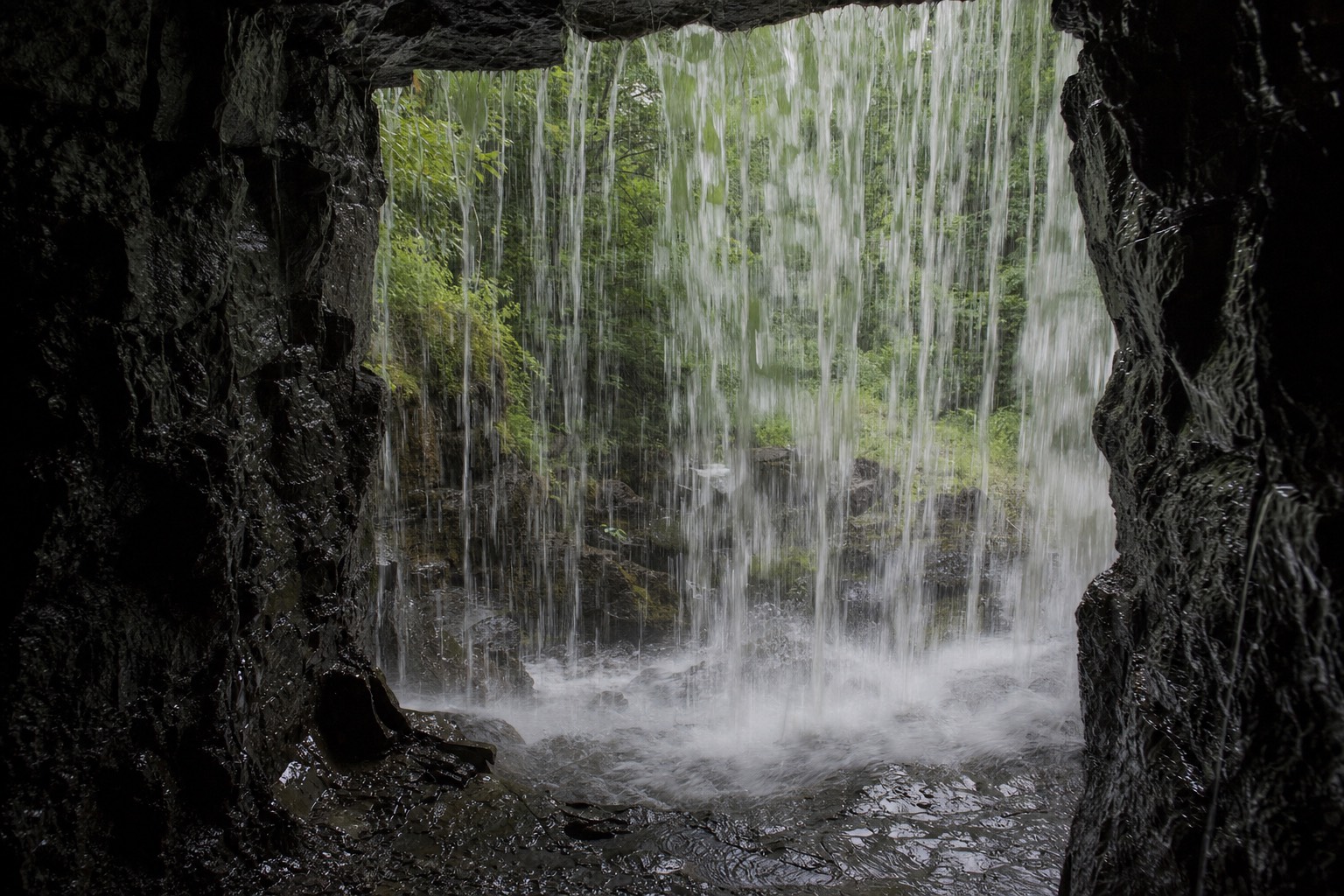
Every other Niagara attraction puts you in front of the water or under it. This one puts you behind it, in tunnels bored through the rock the falls have been eating away at for thousands of years, with the sheet of Horseshoe Falls passing across the opening like a wall of moving glass.
A guided package is useful when you want the surrounding attractions and logistics as well as a boat ride; it is a different purchase from a boat-only ticket.
Booking choice. Journey Behind the Falls, Skylon Tower and a seasonal Niagara City Cruises ride in one walking itinerary. Explore Canadian walking tour: boat, Journey & Skylon
What is Journey Behind the Falls?
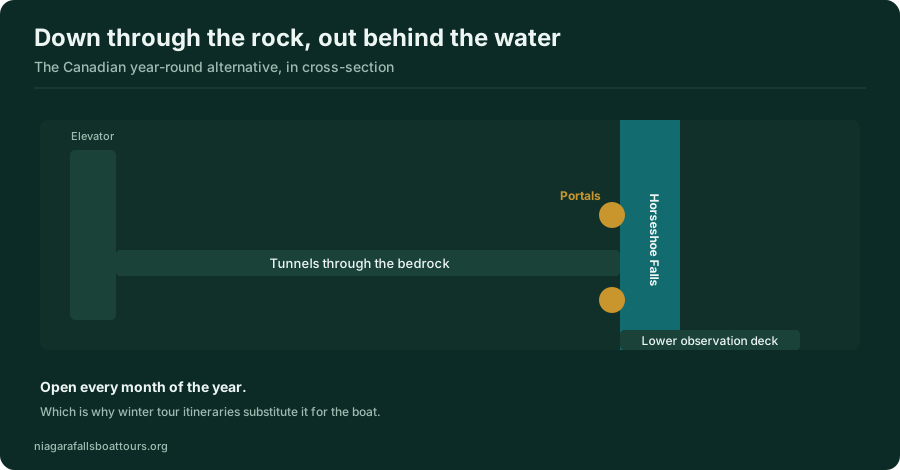
A Niagara Parks attraction on the Canadian side: an elevator down through the bedrock, then tunnels ending at two portals directly behind the sheet of Horseshoe Falls, plus an observation deck at its base. It runs every month of the year.
The portals are the point. You are standing in rock, looking out, and the view is entirely water. There is no horizon, no sky, just the vertical face of the falls moving past a few metres away. It is quieter than the Hurricane Deck and quieter than the boat, and the effect is closer to standing inside the mechanism than watching it.
| Journey Behind the Falls | The boat | |
|---|---|---|
| Side | Ontario only | Both sides have one |
| Where you are | Behind the falls, in rock tunnels | In front of them, on the water |
| Which falls | Horseshoe Falls | All three, ending at the Horseshoe |
| Season | Year-round | Roughly May to early November |
| How wet | Largely dry, spray at the portals | Soaked |
| Noise | Loud, bearable | Extreme in the basin |
| Time needed | About an hour | About 20 minutes, plus the queue |
Why does it matter so much for winter visitors?
Because it is the only close-contact experience at Niagara that survives the winter. Both boats come out of the water and Cave of the Winds is dismantled, so between roughly December and April this is what remains.
That single fact reshapes a cold-weather trip. A February visitor to the American side has the falls from a railing and very little else. A February visitor to Ontario has the falls head-on from the promenade, the illumination at night, and this. Our season guide sets out what closes when.
It also explains something confusing on tour listings. Products that carry "boat" in the title year-round frequently substitute Journey Behind the Falls between November and April, because that is the honest thing to offer when the boats are docked. The both-sides day tour does exactly this and states it plainly, which is what a fair substitution looks like. It holds 4.9 across 9,589 Viator reviews.
Should you do Journey Behind the Falls and the boat?
Yes, and in that order or the reverse; it matters far less than the American-side sequencing. They are close together on the Ontario bank, they complement rather than duplicate each other, and doing both is the natural shape of a Canadian-side half day.
| Combination | Verdict |
|---|---|
| Boat then Journey Behind the Falls | Ideal; dry off in the tunnels |
| Journey Behind the Falls then boat | Also fine; you stay dry until the boat |
| Journey Behind the Falls alone, in winter | The right call when the boats are docked |
| Boat alone, in summer | Fine if your day is short |
| Both, plus the Skylon Tower | A full Canadian-side day |
| Both, plus crossing to Cave of the Winds | A very full day and a border crossing |
The reason order matters less here than on the American side is that the tunnels are largely dry. Being soaked from the boat is not a problem in a rock corridor the way it is on an open timber deck. Compare that with Cave of the Winds, where doing it before the boat genuinely spoils the boat.
The small-group walking tour with the boat and Journey Behind the Falls is the cleanest way to book the pair, holds 4.7 across 712 Viator reviews, and avoids the parking problem by moving on foot. Our Canadian-side page covers the alternatives.
What is it actually like?
Cold, echoing and slightly disorientating. The tunnels are damp rock with a constant low roar that gets louder as you approach the portals. At the openings the noise is physical and the view is a moving wall of white with no top and no bottom.
The honest caveat, and the one that turns up in visitor accounts most often: at the portals you cannot see very much. It is water, at close range, in enormous quantity. People who arrive expecting a scenic vista come away underwhelmed. People who arrive expecting to stand behind a waterfall come away impressed.
The lower observation deck is where the more conventional view is, at the base of the falls, and it is worth the extra few minutes.
What does a Canadian-side day look like around it?
It slots into a half day easily and a full day comfortably. The boat, the tunnels and the promenade sit within walking distance of each other, which is the practical advantage the Ontario bank has over New York.
| Time | What you are doing | Roughly |
|---|---|---|
| 8:45am | First boat sailing of the day, minimal queue | 1 hour |
| 10am | Journey Behind the Falls, elevator and tunnels | 1 hour |
| 11am | Table Rock and the Horseshoe crestline on foot | 30 minutes |
| Midday | Lunch above the falls | 1 hour |
| 2pm | Skylon Tower or Clifton Hill | 1 to 2 hours |
| Evening | The falls illuminated from the promenade | Free |
| Winter variant | Tunnels, promenade and illumination, no boat | Half a day |
The reason the boat goes first in that schedule is the queue, not the tunnels. Niagara Falls Tourism sets out the cruise's own operating pattern, and our queue guide explains why the first sailing is worth building a morning around.
Practical detail
It sits within the Niagara Parks estate on the Ontario bank, close to the Horseshoe crestline and a short walk from the boat landing in the lower gorge. Niagara Parks sells combination passes that include both this and the cruise, which is usually the better buy if you intend to do both. Parking is charged separately on the parkway.
Anyone crossing from New York to reach it needs a passport, NEXUS card or enhanced driver's licence for the Rainbow Bridge, covered in our border guide. Its dimensions and geology are set out by Niagara Parks' own facts and figures page, which is also where the 57-metre drop figure comes from.
Questions about Journey Behind the Falls
Is Journey Behind the Falls worth it?
Yes, particularly outside the boat season when it is the only close-contact experience running. Go expecting to stand behind a wall of moving water rather than expecting a scenic view, because at the portals you see water and very little else.
Is Journey Behind the Falls open in winter?
Yes, it runs year-round. That is what distinguishes it from both boats and from Cave of the Winds, all of which close for the winter, and it is why winter tour itineraries substitute it for the cruise.
How long does Journey Behind the Falls take?
About an hour including the elevator, the tunnels, the portals and the lower observation deck. Add queueing time in peak summer, though it absorbs crowds better than the boat because it is not constrained by a vessel's capacity.
Do you get wet at Journey Behind the Falls?
Barely. A poncho is provided and there is spray at the portals and on the observation deck, but the tunnels are enclosed rock. Compared with the boat or the Hurricane Deck it is a dry experience.
Is it better than the boat?
Different rather than better. The boat gives you scale and force from the water; this gives you proximity and strangeness from behind. If you can only do one in summer, most people prefer the boat. In winter the question does not arise.
Is there an American-side version?
No. Cave of the Winds is the American close-contact attraction, but it is an open timber deck beneath Bridal Veil Falls rather than tunnels behind Horseshoe Falls, and it is seasonal rather than year-round.
Choose your Niagara day
General editorial starting point; confirm dates, route and personal requirements.
Canadian walking tour: boat, Journey & Skylon
Have a travel date in mind? Check this itinerary before arranging separate admissions. Journey Behind the Falls, Skylon Tower and a seasonal Niagara City Cruises ride in one walking itinerary.
About 3 hours 15 minutes plus check-in. Choose the Niagara Falls, Canada walking option. Meet inside Skylon Tower, 5200 Robinson Street, at the See Sight check-in. English. Guided portion ends at boat boarding; no return transfer. Winter boat replacement is Niagara Takes Flight, which excludes infants and children under 100 cm. Confirm exact seasonal itinerary and access needs.
Choose a date to see Viator scheduled departures. Final availability and price are confirmed on Viator.
Choose only the details that matter. Unanswered fields keep this general guidance; a choice can rule out a package.
| Canadian walking tour: boat, Journey & Skylon | Journey Behind the Falls, Skylon Tower and a seasonal Niagara City Cruises ride in one walking itinerary. About 3 hours 15 minutes plus check-in. Choose the Niagara Falls, Canada walking option. Meet inside Skylon Tower, 5200 Robinson Street, at the See Sight check-in. English. Guided portion ends at boat boarding; no return transfer. Winter boat replacement is Niagara Takes Flight, which excludes infants and children under 100 cm. Confirm exact seasonal itinerary and access needs. |
|---|---|
| USA boat, Cave & hotel pickup | Maid of the Mist, Cave of the Winds and the Observation Tower in one guided American-side itinerary. About 4 hours, plus pickup up to an hour before. Pickup in Niagara Falls, NY, not Buffalo or NYC. English; shared tour. Boat and Cave operations are seasonal; winter substitutes differ. Food is extra. Confirm access needs with the operator. |
| Both sides with boat, Cave & Skylon | American-side boat and Cave stops plus Skylon Tower views in Canada. About 6 hours, plus pickup and border delays; reserve a full day. Niagara Falls ON/NY hotel pickup. English; shared tour. Appropriate entry documents for both countries required. Reconfirm with Over the Falls at least 24 hours ahead. Vehicles cannot accommodate occupied wheelchairs; assisted transfer and collapsible chairs need advance arrangement. Seasonal substitutions; food extra. |
Compare your own group totals
Use the same currency and the same party. Include admissions, transport, parking and taxes in the DIY total. Quotes are your inputs, not prices supplied here.
Enter both totals to compare the cost of the guided itinerary with your independent plan.