What twenty minutes at the base of Horseshoe Falls is actually like
Minute by minute through a Niagara boat ride: the unremarkable first half, the moment the world stops being a view, and the four minutes nobody manages to describe afterwards.
 By Michael Thompson, Niagara Falls boat tour specialist and local guide
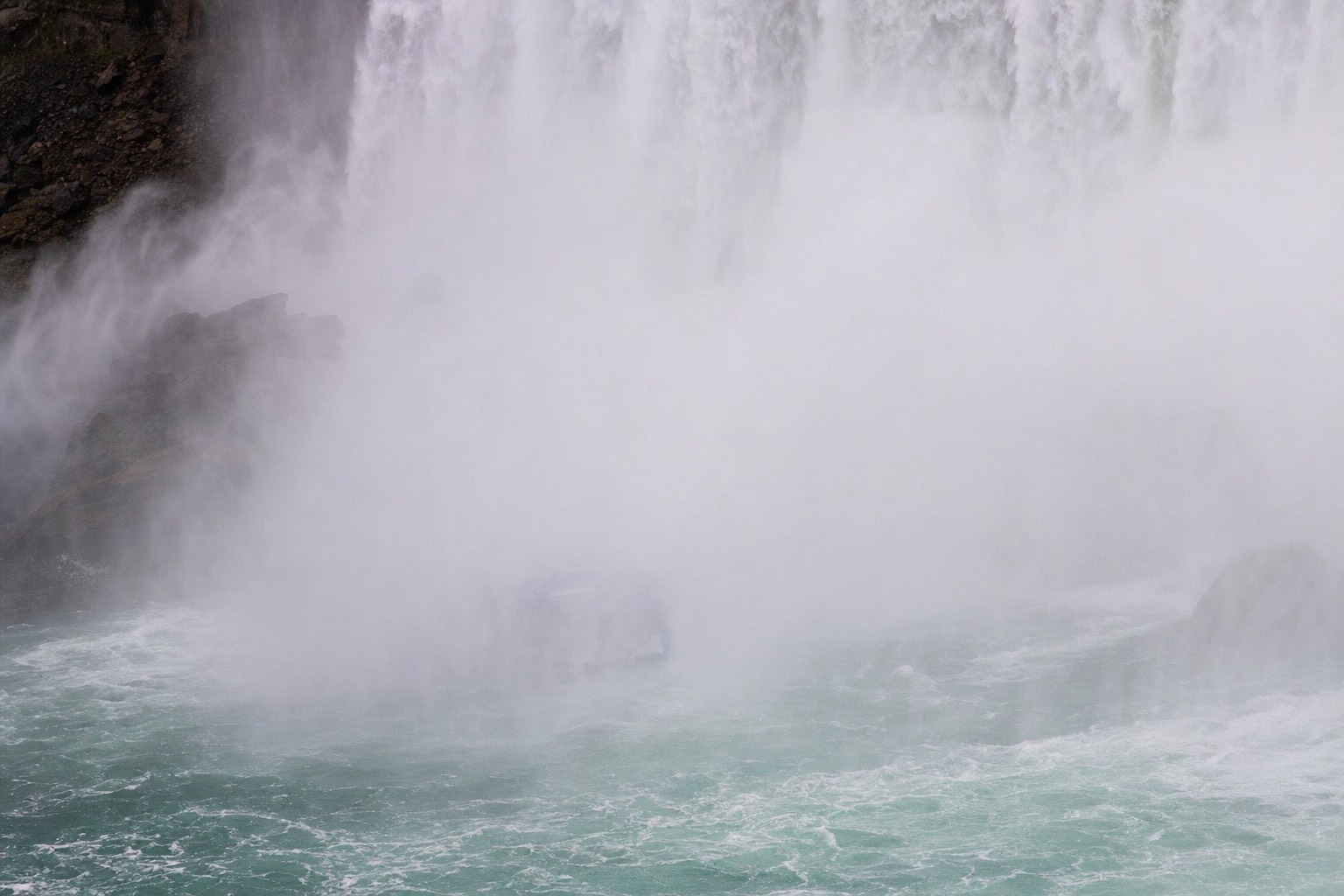
Almost everyone who writes about the Niagara boat ride reaches for the same three words, and the reason is that the experience defeats description in a specific and interesting way. There is no vocabulary for being unable to see, hear or breathe normally while nothing is actually wrong.
What follows is what the twenty minutes actually contains, in order, because the average account skips straight to the end.
A guided package is useful when you want the surrounding attractions and logistics as well as a boat ride; it is a different purchase from a boat-only ticket.
Booking choice. Maid of the Mist, Cave of the Winds and the Observation Tower in one guided American-side itinerary. Explore USA boat, Cave & hotel pickup
The first eight minutes are ordinary
This surprises people. The boat pulls out of the landing and motors up the gorge at a modest pace, and for a while it is a river cruise with a very good backdrop. The gorge walls are high and green, the Rainbow Bridge passes overhead, and the American Falls slide past on one side looking exactly as they do in photographs.
There is usually a moment around minute five when a few passengers start to look faintly unimpressed. They came expecting the thing they saw on television and they are getting scenery.
| Minute | What is happening | What people are doing |
|---|---|---|
| 0 to 2 | Boarding completes, the boat pulls away | Finding a spot at the rail |
| 2 to 5 | Transit up the gorge | Photographing the gorge walls |
| 5 to 8 | Past the American and Bridal Veil Falls | Getting the postcard shot |
| 8 to 11 | Approaching the Horseshoe, spray begins | Ponchos up, phones away |
| 11 to 16 | Inside the basin | Nothing; you cannot do anything |
| 16 to 20 | Turn and return | Laughing, dripping, quiet |
Then the boat turns
The transition is not gradual. There is a point where the vessel comes about into the Horseshoe basin and the character of everything changes inside about fifteen seconds.
The spray arrives first. Not from above, which is what people brace for, but sideways, in sheets, from a direction that reverses every few seconds as the air circulates in the bowl of the falls. The poncho becomes a wind-catching liability rather than a shelter. Anyone still holding a phone discovers the lens has beaded over.
Then the noise. It is genuinely difficult to convey that the sound arrives in your chest rather than your ears. Conversation stops being possible, not because it is loud in the way a concert is loud, but because the air itself is moving too much to carry a voice two feet.
And then the thing nobody expects: you cannot see the top. About 2,400 cubic metres of water a second is landing in front of you from roughly 57 metres up, and from directly underneath there is no crestline, no sky, no edge. Just white, moving, in every direction you look.
Why the good part is shorter than the ticket suggests
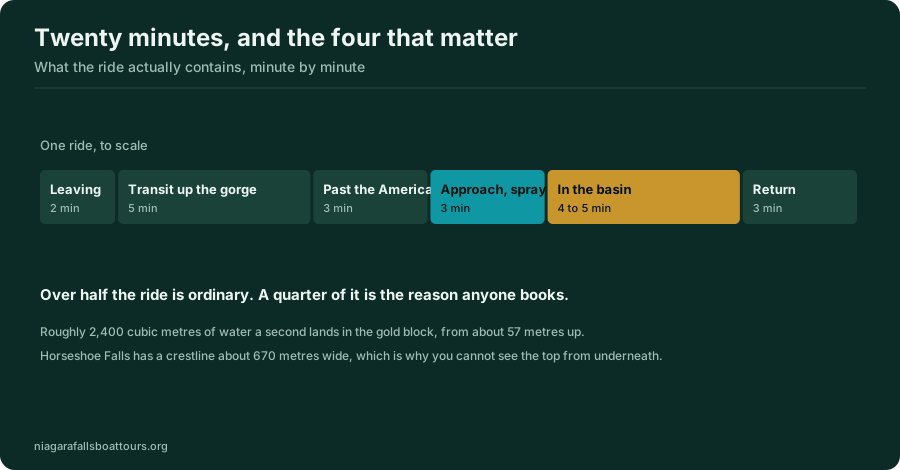
Four to five minutes, out of twenty. That is the honest measure of what the fare buys, and it is worth stating plainly because so much of the disappointment people report comes from expecting a different ratio.
| What you are buying | Roughly | Share of the ride |
|---|---|---|
| Transit and scenery | 11 minutes | Over half |
| Approach and spray building | 3 minutes | A sixth |
| Inside the basin | 4 to 5 minutes | A quarter |
| Return | 3 minutes | A sixth |
Whether that is good value is genuinely a personal judgement, and our is it worth it guide lays out both cases. What is not in dispute is that those four minutes are unlike anything else at Niagara, including the viewing platforms, the tower and the tunnels.
What people actually say afterwards
The pattern in visitor accounts is consistent enough to be interesting. Complaints and praise are almost never about the same thing, and they coexist happily in the same review.
| What people complain about | What people praise |
|---|---|
| The queue was longer than the ride | The last few minutes were extraordinary |
| Twenty minutes is too short | Photographs do not prepare you for the scale |
| We got soaked despite the poncho | Getting soaked was half the fun |
| Too crowded at the rail | Worth the wait |
| Expensive for what it is | Best thing we did at Niagara |
That is an unusual shape for a review set. Most attractions attract people who liked it and people who did not. This one mostly attracts people who found the logistics irritating and the experience remarkable, at the same time, which is a strong signal about the product itself.
The practical postscript
Two things ruin the four minutes for people, and both are avoidable.
The first is the phone. Almost nobody gets a usable photograph inside the basin, because the lens beads instantly and there is nothing to wipe it on that is not already wet. A sealed pouch fixes it. Our what to bring guide covers the rest of the kit.
The second is arriving at midday in July, queueing for an hour, and boarding already tired and irritated. The first sailings around 8:45 to 9am change the whole texture of the morning.
If you want the version with none of the logistics attached, the both-sides day tour handles ticketing, the border and the admissions, and holds 4.9 across 9,589 Viator reviews. Out of boat season it substitutes Journey Behind the Falls, which is the honest thing to do given the operators' published season dates and Niagara Parks' own attraction detail.
Questions people ask about the ride itself
How long are you actually at the falls on the boat?
About four to five minutes inside the Horseshoe Falls basin, out of roughly twenty minutes on the water. The rest is transit up and back down the gorge, which is pleasant but ordinary.
Can you see anything inside the basin?
Very little, and that is part of the effect. From directly underneath there is no crestline and no sky, just moving white in every direction, with spray arriving sideways rather than from above.
Is it frightening?
Overwhelming rather than frightening. There is no drop, no speed and no sudden movement. What there is, for a few minutes, is noise you feel physically and water coming at you from every angle.
Can you hear the guide?
Not in the basin. Any commentary happens on the way out and the way back. For the few minutes that matter, the falls are considerably louder than any public address system.
Do you get better photographs from the boat or the shore?
The shore, easily, and specifically the Canadian promenade facing the Horseshoe crestline. From the boat the lens is wet and the subject is a white wall with no visible edges. Ride for the experience and photograph from land.
Choose your Niagara day
General editorial starting point; confirm dates, route and personal requirements.
USA boat, Cave & hotel pickup
Have a travel date in mind? Check this itinerary before arranging separate admissions. Maid of the Mist, Cave of the Winds and the Observation Tower in one guided American-side itinerary.
About 4 hours, plus pickup up to an hour before. Pickup in Niagara Falls, NY, not Buffalo or NYC. English; shared tour. Boat and Cave operations are seasonal; winter substitutes differ. Food is extra. Confirm access needs with the operator.
Choose a date to see Viator scheduled departures. Final availability and price are confirmed on Viator.
Choose only the details that matter. Unanswered fields keep this general guidance; a choice can rule out a package.
| USA boat, Cave & hotel pickup | Maid of the Mist, Cave of the Winds and the Observation Tower in one guided American-side itinerary. About 4 hours, plus pickup up to an hour before. Pickup in Niagara Falls, NY, not Buffalo or NYC. English; shared tour. Boat and Cave operations are seasonal; winter substitutes differ. Food is extra. Confirm access needs with the operator. |
|---|---|
| Canadian walking tour: boat, Journey & Skylon | Journey Behind the Falls, Skylon Tower and a seasonal Niagara City Cruises ride in one walking itinerary. About 3 hours 15 minutes plus check-in. Choose the Niagara Falls, Canada walking option. Meet inside Skylon Tower, 5200 Robinson Street, at the See Sight check-in. English. Guided portion ends at boat boarding; no return transfer. Winter boat replacement is Niagara Takes Flight, which excludes infants and children under 100 cm. Confirm exact seasonal itinerary and access needs. |
| Both sides with boat, Cave & Skylon | American-side boat and Cave stops plus Skylon Tower views in Canada. About 6 hours, plus pickup and border delays; reserve a full day. Niagara Falls ON/NY hotel pickup. English; shared tour. Appropriate entry documents for both countries required. Reconfirm with Over the Falls at least 24 hours ahead. Vehicles cannot accommodate occupied wheelchairs; assisted transfer and collapsible chairs need advance arrangement. Seasonal substitutions; food extra. |
Compare your own group totals
Use the same currency and the same party. Include admissions, transport, parking and taxes in the DIY total. Quotes are your inputs, not prices supplied here.
Enter both totals to compare the cost of the guided itinerary with your independent plan.