Are the Niagara boat tours wheelchair accessible?
Getting down to the water is the easy part. The deck is where the sides differ.
 Written with Michael Thompson, Niagara Falls boat tour specialist and local guide
Short answer
Yes, both are. Maid of the Mist states its experience is ADA accessible, with elevators and ramps to the boarding area and wheelchairs permitted aboard. Niagara City Cruises has ramps and elevators to the lower landing, a limited number of loaner wheelchairs on site, and designated seating.
Niagara is better on accessibility than its geography suggests. The falls sit at the top of a gorge and the boats sit at the bottom of it, which sounds like a problem, and both operators solved it decades ago with elevators.
The boat’s accessibility is only one part of a guided package. Confirm vehicles, walking routes, decks and individual arrangements separately.
Booking choice. Maid of the Mist, Cave of the Winds and the Observation Tower in one guided American-side itinerary. Explore USA boat, Cave & hotel pickup
Are the Niagara Falls boat tours wheelchair accessible?
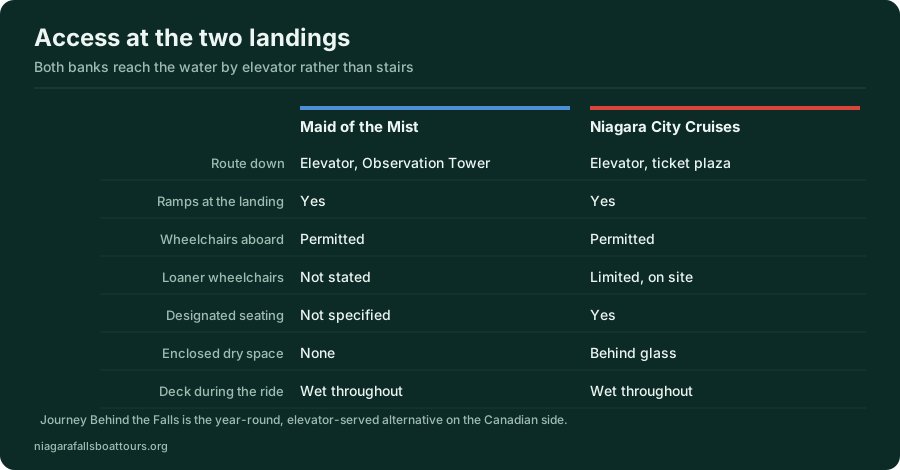
Yes, on both sides. Maid of the Mist states its experience is ADA accessible, with elevators and ramps down to the boarding area and wheelchairs allowed on the boats. Niagara City Cruises provides ramps and elevators to the lower landing, designated seating, and a limited number of loaner wheelchairs.
| Maid of the Mist (New York) | Niagara City Cruises (Ontario) | |
|---|---|---|
| Route down to the landing | Elevator from the Observation Tower | Elevator from the ticket plaza |
| Ramps at the landing | Yes | Yes |
| Wheelchairs on board | Permitted | Permitted |
| Loaner wheelchairs on site | Not stated by the operator | Limited number, first come first served |
| Designated seating | Not specified | Yes |
| Poncho assistance | Handed out at boarding | Handed out at boarding |
| Deck surface in use | Wet throughout the ride | Wet throughout the ride |
The honest caveat that applies to both: the deck is wet, moving and crowded for twenty minutes. That is a different challenge from step-free access, and it is the one worth planning for.
What is actually difficult, if not the stairs?
The crowd and the wet deck, not the descent. Both boats fill their rails, the surface is slick throughout the ride, and the boarding queue does not have much room for manoeuvring. The Canadian catamarans are larger, which helps with space and hurts with volume.
| Aspect | Easier on | Why |
|---|---|---|
| Getting down to the water | Comparable | Both run elevators and ramps |
| Space on deck | Canada | 700-passenger catamarans have more room |
| Crowd density at the rail | New York | Smaller boats, fewer people pressing forward |
| Staying dry while seated | Canada | Enclosed space behind glass exists |
| Loaner equipment | Canada | Limited wheelchairs available on site |
| Queue length at peak | Comparable | Both stack at midday in summer |
| Getting a seat | Canada | Designated seating is specified |
The enclosed space on the Canadian vessels deserves particular mention here, because it is not just a dry option. It is a seated, sheltered, stable position with a view through glass, which for some visitors is the difference between a viable ride and an unviable one. Our getting wet guide explains what the open deck is genuinely like.
What about visitors with other access needs?
Noise is the underrated factor. Inside the Horseshoe basin the sound is physical rather than merely loud, and there is no quiet part of either vessel. For anyone sensitive to noise or to sudden sensory load, that is a bigger consideration than any step.
| Need | On the boats | Alternative that works better |
|---|---|---|
| Wheelchair or limited mobility | Both accessible, elevators and ramps | Journey Behind the Falls, also elevator-served |
| Noise sensitivity | Very loud, no quiet position | The promenade, or Journey Behind the Falls |
| Visual impairment | Sound and spray carry the experience well | The boat works better than photographs suggest |
| Fear of crowds | Rails are packed at peak | Ride the first sailings, or the enclosed cabin |
| Fatigue or limited standing | Canadian side has designated seating | Book the Canadian boat |
| Strollers and pushchairs | Awkward at the landing and on deck | Carry small children, park the stroller |
For a visitor who cannot manage the boat, the Canadian side has the better fallback by a distance. Journey Behind the Falls puts you behind the sheet of water in rock tunnels, is elevator-served, is quieter, and runs year-round rather than seasonally.
Which side should you choose for accessibility?
The Canadian side, marginally, for the loaner wheelchairs, the designated seating and the enclosed space. The American side is fully accessible too, and if you are already in New York the crossing costs more effort than the difference is worth.
That last point matters. Crossing the Rainbow Bridge to reach a slightly better-equipped boat means a border queue, a toll and a walk, which for many visitors with mobility needs is a worse trade than riding the accessible boat on the bank they are standing on. Our border guide covers what the crossing involves.
If you are booking a guided tour rather than a standalone ticket, contact the operator through the listing before you book. Tour products bundle walking, transfers and timings that a standalone ticket does not, and those are the parts most likely to create a problem.
Practical advice for the day
Ride early. Every access difficulty at Niagara is a crowd difficulty in disguise, and the first sailings around 8:45 to 9am have a fraction of the midday volume. That single change does more for a difficult boarding than any equipment. Our queue guide has the timings.
Accessibility questions
Is the Maid of the Mist wheelchair accessible?
Yes. The operator states the experience is ADA accessible, with elevators and ramps down to the boarding area and wheelchairs permitted on board. The deck is wet and crowded during the ride, which is a separate consideration from step-free access.
Is Niagara City Cruises wheelchair accessible?
Yes. There are ramps and elevators to the lower landing, designated seating aboard, and a limited number of loaner wheelchairs available on site on a first-come basis.
Can you stay seated during the boat ride?
On the Canadian side, yes, with designated seating and enclosed space behind glass. On the American side there is less specified seating and no enclosed area, so most passengers stand at the rail for the twenty minutes.
Are there stairs down to the boat?
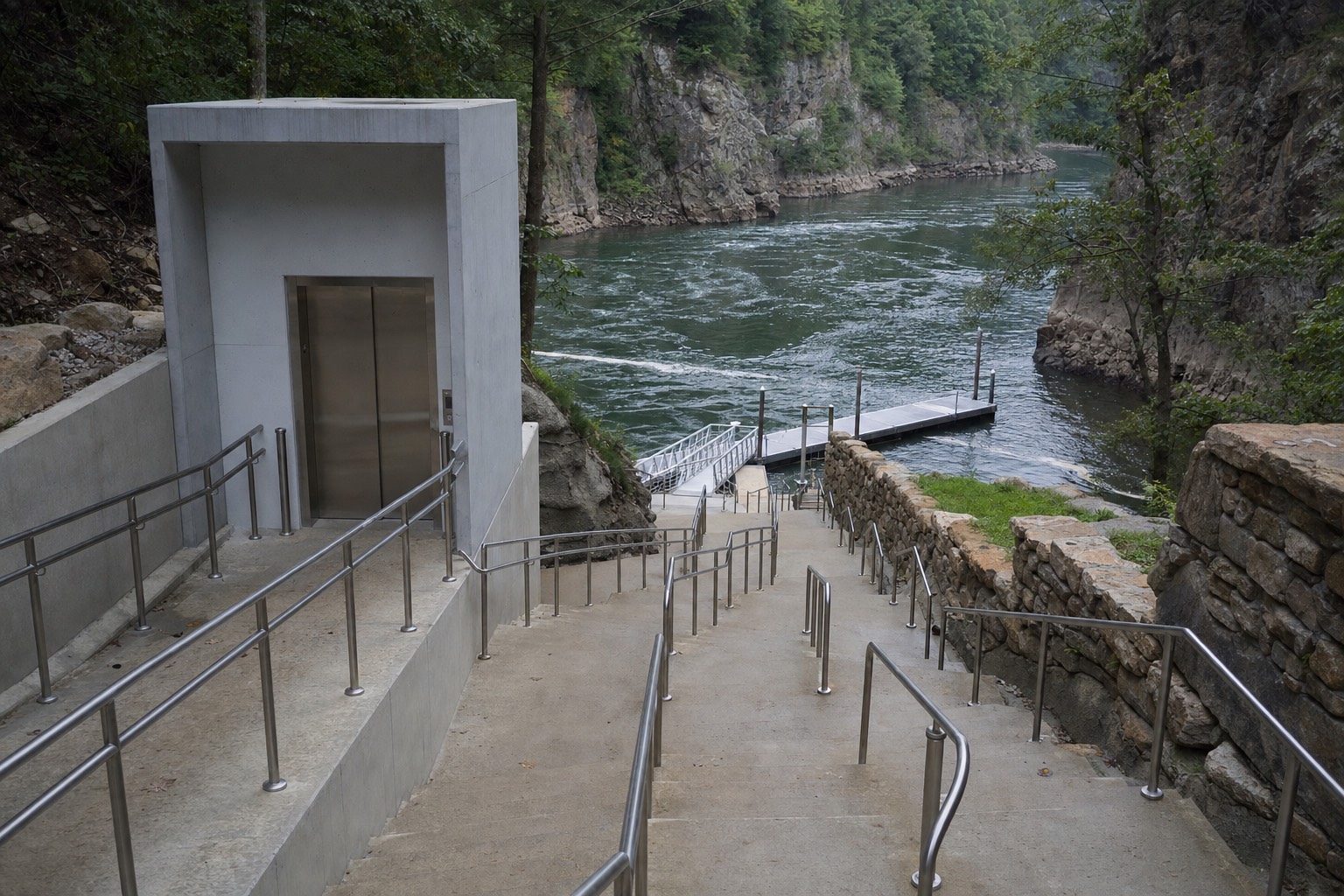
Elevators serve both landings, from the Observation Tower on the American side and from the ticket plaza on the Canadian side. Stairs exist but are not the required route on either bank.
Can you take a stroller on the boat?
It is awkward rather than forbidden. The boarding queue is tight, the deck is wet and crowded, and there is nowhere convenient to leave a stroller once aboard. Most parents find carrying a small child works better for the twenty minutes.
What is the alternative if the boat is not manageable?
Journey Behind the Falls on the Canadian side. It is elevator-served, considerably quieter, keeps you largely dry, puts you behind the sheet of Horseshoe Falls, and runs year-round rather than only in the boat season.
Choose your Niagara day
General editorial starting point; confirm dates, route and personal requirements.
USA boat, Cave & hotel pickup
Have a travel date in mind? Check this itinerary before arranging separate admissions. Maid of the Mist, Cave of the Winds and the Observation Tower in one guided American-side itinerary.
About 4 hours, plus pickup up to an hour before. Pickup in Niagara Falls, NY, not Buffalo or NYC. English; shared tour. Boat and Cave operations are seasonal; winter substitutes differ. Food is extra. Confirm access needs with the operator.
Choose a date to see Viator scheduled departures. Final availability and price are confirmed on Viator.
Choose only the details that matter. Unanswered fields keep this general guidance; a choice can rule out a package.
| USA boat, Cave & hotel pickup | Maid of the Mist, Cave of the Winds and the Observation Tower in one guided American-side itinerary. About 4 hours, plus pickup up to an hour before. Pickup in Niagara Falls, NY, not Buffalo or NYC. English; shared tour. Boat and Cave operations are seasonal; winter substitutes differ. Food is extra. Confirm access needs with the operator. |
|---|---|
| Canadian walking tour: boat, Journey & Skylon | Journey Behind the Falls, Skylon Tower and a seasonal Niagara City Cruises ride in one walking itinerary. About 3 hours 15 minutes plus check-in. Choose the Niagara Falls, Canada walking option. Meet inside Skylon Tower, 5200 Robinson Street, at the See Sight check-in. English. Guided portion ends at boat boarding; no return transfer. Winter boat replacement is Niagara Takes Flight, which excludes infants and children under 100 cm. Confirm exact seasonal itinerary and access needs. |
| Both sides with boat, Cave & Skylon | American-side boat and Cave stops plus Skylon Tower views in Canada. About 6 hours, plus pickup and border delays; reserve a full day. Niagara Falls ON/NY hotel pickup. English; shared tour. Appropriate entry documents for both countries required. Reconfirm with Over the Falls at least 24 hours ahead. Vehicles cannot accommodate occupied wheelchairs; assisted transfer and collapsible chairs need advance arrangement. Seasonal substitutions; food extra. |
Compare your own group totals
Use the same currency and the same party. Include admissions, transport, parking and taxes in the DIY total. Quotes are your inputs, not prices supplied here.
Enter both totals to compare the cost of the guided itinerary with your independent plan.