Crossing the Rainbow Bridge between the two boats
The best free view at Niagara is from the middle of a border crossing. What walking between the two sides actually involves, what it costs, and when to do it.
 By Michael Thompson, Niagara Falls boat tour specialist and local guide
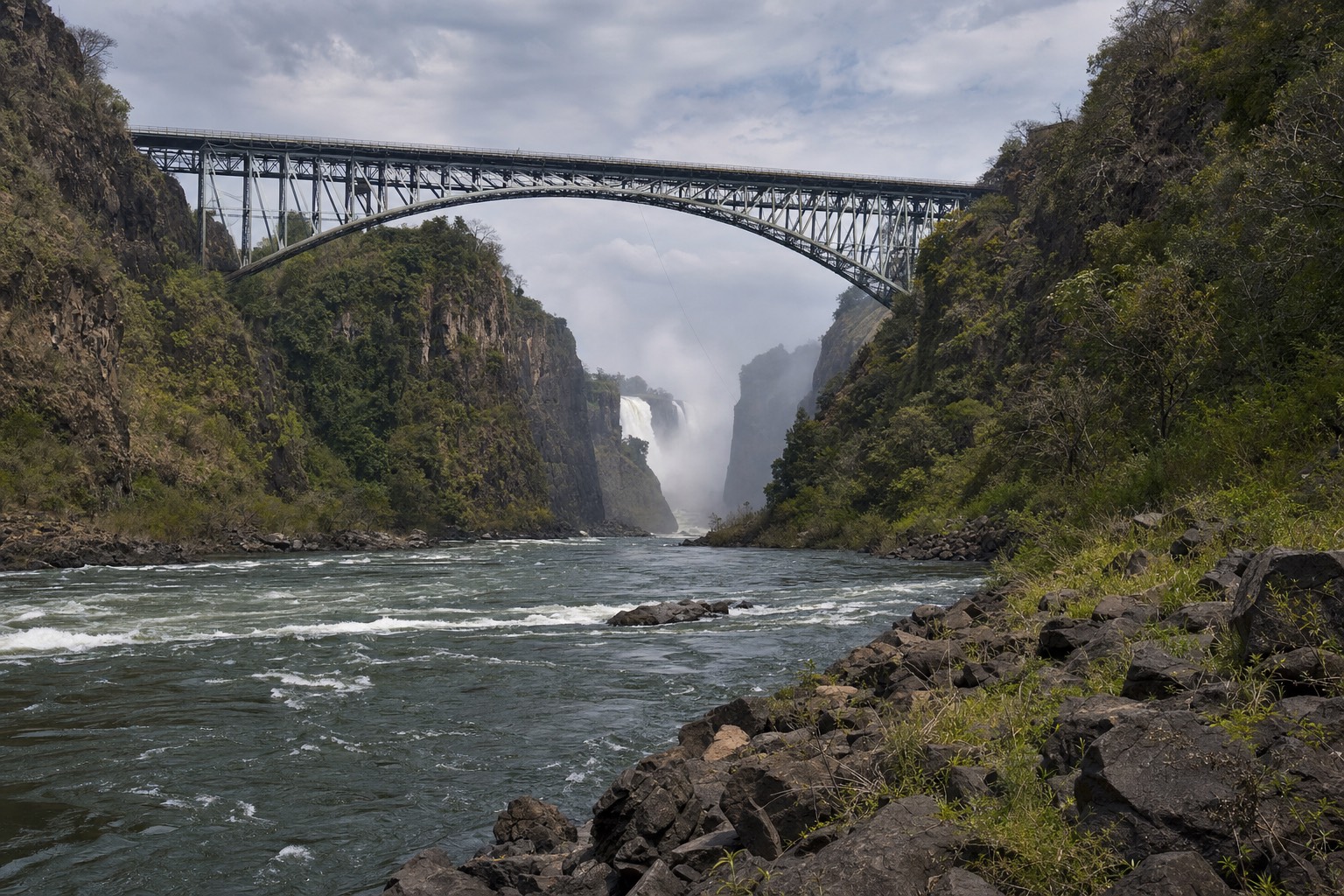
Halfway across the Rainbow Bridge there is a line on the pavement, and standing on it you are in neither country and can see both waterfalls. It is the best free thing at Niagara Falls and most visitors drive over it without stopping.
Choose your starting country before choosing a tour. A both-sides package still requires each traveller to meet both countries’ entry rules.
Booking choice. American-side boat and Cave stops plus Skylon Tower views in Canada. Explore Both sides with boat, Cave & Skylon
What the crossing actually is
A working international border. Not a checkpoint-flavoured tourist experience: a port of entry, staffed by two countries' border agencies, with the same rules that apply at an airport.
That means a passport, a NEXUS card or an enhanced driver's licence for every person in your group, including children. A standard driver's licence is not a border document. A pedestrian toll is collected on the Canadian side when walking toward the USA.
| What you need | Accepted |
|---|---|
| Valid passport | Yes, the straightforward option |
| Passport card | Yes, for land crossings |
| NEXUS card | Accepted for eligible members; Rainbow Bridge has no dedicated NEXUS lane |
| Enhanced driver's licence | Yes, where your state or province issues one |
| Standard driver's licence | No |
| Birth certificate alone, adult | No |
| Nothing | You stay on the side you are on |
Our border guide covers the detail, including how children's requirements differ and why carrying a passport per person removes every edge case at once.
Walking beats driving
This surprises people who have a car and assume the car is the convenient option. On a summer afternoon the vehicle queue at the Rainbow Bridge can be considerably longer than the pedestrian one, and you arrive on the far side needing to park.
| Method | Typical time | The catch |
|---|---|---|
| On foot, early morning | 10 to 15 minutes | None; this is the good version |
| On foot, midday in summer | 30 to 60 minutes | Border queue |
| By car, off-peak | 15 to 30 minutes | Then you need parking |
| By car, summer weekend | An hour or more | Then you still need parking |
| With NEXUS | Faster | Requires the card |
| On a guided tour | Handled | Still subject to the same queue |
The walk itself is short and the view from the middle is the whole argument. You are suspended over the gorge with the American Falls on one side and the Horseshoe crestline ahead, in the one position at Niagara that belongs to neither bank.
The two-boat question
People cross specifically to ride both boats, and it is worth saying plainly that this is not a good use of a day. The two rides are close to identical: about twenty minutes each, same route, same basin, different poncho colour. Paying twice for that is paying twice for the same experience.
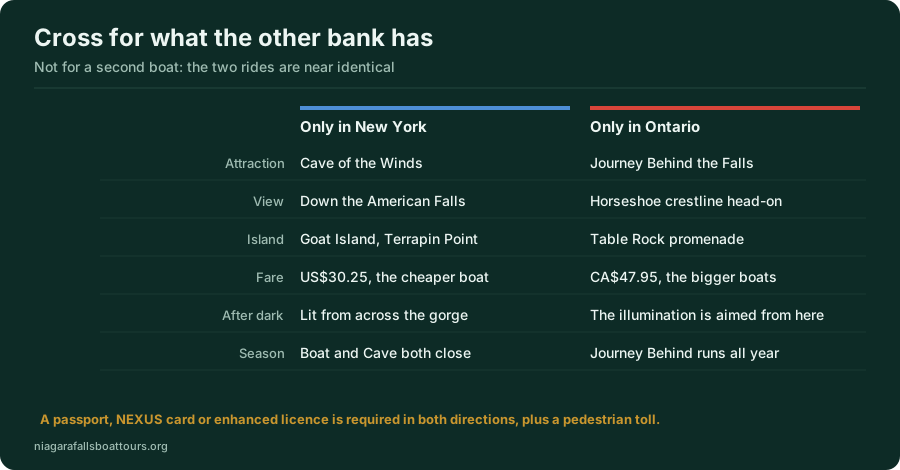
What is genuinely worth crossing for is everything that is not the boat, because each bank has exactly one thing the other cannot offer.
| Only on the American side | Only on the Canadian side |
|---|---|
| Cave of the Winds and the Hurricane Deck | Journey Behind the Falls |
| The Observation Tower over the American Falls | The head-on view of the Horseshoe crestline |
| Goat Island and Terrapin Point | The nightly illumination, aimed from this bank |
| The cheaper boat fare, US$30.25 | The larger boats and enclosed space |
| Niagara Falls State Park | Table Rock and the promenade |
Our comparison page sets out the full picture. The short version: cross for the attractions, not for a second boat.
When to do it
Early. A both-sides day that starts on the American bank at first light, rides the boat at 8:45, does Cave of the Winds, and crosses mid-morning works considerably better than one attempting the bridge at lunchtime.
The reason is compounding. The boat queue peaks around midday, the border queue peaks around midday, and the parking fills around midday. Doing anything at Niagara between eleven and two in July means meeting all three at once. Our post on the day that is mostly queueing has the hour-by-hour picture.
The reverse itinerary works too, and arguably better in one respect: start in Ontario, cross to New York in the morning, and come back for the evening illumination, which is nightly, free and aimed from the Canadian bank. Our evening guide covers the timing.
If you would rather not deal with it
A guided both-sides day removes the parts you can plan for: the tolls, the parking on two banks, the admissions and the sequencing. It does not remove the border queue and it certainly does not remove the document requirement.
The both-sides one-day tour folds the Maid of the Mist, Cave of the Winds, the Skylon Tower, admissions, transfers and tolls into one booking and holds 4.9 across 9,589 Viator reviews. Out of boat season it substitutes Journey Behind the Falls, which Niagara Parks keeps open year-round while the American boat is docked.
Crossing questions
Can you walk across the Rainbow Bridge?
Yes, and it is usually the better option. The walk is short, a pedestrian toll is collected on the Canadian side when walking toward the USA, and the view from mid-span is the best free vantage point at Niagara. You still need a passport or enhanced ID.
How long does the Rainbow Bridge crossing take?
Ten to fifteen minutes on foot early in the morning, and thirty to sixty at midday in summer. By car it is often slower, and you arrive needing to park on the far side.
Is it worth riding both boats?
No. They are close to identical: about twenty minutes each, same route, same basin. Crossing is worth it for Cave of the Winds, Journey Behind the Falls and the Canadian view, none of which have equivalents on the other bank.
Do children need a passport to cross?
Requirements for children at land crossings vary by age, nationality and who they are travelling with. Carrying a passport for everyone in the group, including infants, removes every edge case and is the reliable approach.
What is the best view from the bridge?
Mid-span, where you are over the gorge with the American Falls to one side and the Horseshoe crestline ahead. It costs only the pedestrian toll and it is the one position at Niagara that belongs to neither country.
Choose your Niagara day
General editorial starting point; confirm dates, route and personal requirements.
Both sides with boat, Cave & Skylon
Have a travel date in mind? Check this itinerary before arranging separate admissions. American-side boat and Cave stops plus Skylon Tower views in Canada.
About 6 hours, plus pickup and border delays; reserve a full day. Niagara Falls ON/NY hotel pickup. English; shared tour. Appropriate entry documents for both countries required. Reconfirm with Over the Falls at least 24 hours ahead. Vehicles cannot accommodate occupied wheelchairs; assisted transfer and collapsible chairs need advance arrangement. Seasonal substitutions; food extra.
Choose a date to see Viator scheduled departures. Final availability and price are confirmed on Viator.
Choose only the details that matter. Unanswered fields keep this general guidance; a choice can rule out a package.
| Both sides with boat, Cave & Skylon | American-side boat and Cave stops plus Skylon Tower views in Canada. About 6 hours, plus pickup and border delays; reserve a full day. Niagara Falls ON/NY hotel pickup. English; shared tour. Appropriate entry documents for both countries required. Reconfirm with Over the Falls at least 24 hours ahead. Vehicles cannot accommodate occupied wheelchairs; assisted transfer and collapsible chairs need advance arrangement. Seasonal substitutions; food extra. |
|---|---|
| USA boat, Cave & hotel pickup | Maid of the Mist, Cave of the Winds and the Observation Tower in one guided American-side itinerary. About 4 hours, plus pickup up to an hour before. Pickup in Niagara Falls, NY, not Buffalo or NYC. English; shared tour. Boat and Cave operations are seasonal; winter substitutes differ. Food is extra. Confirm access needs with the operator. |
| Canadian walking tour: boat, Journey & Skylon | Journey Behind the Falls, Skylon Tower and a seasonal Niagara City Cruises ride in one walking itinerary. About 3 hours 15 minutes plus check-in. Choose the Niagara Falls, Canada walking option. Meet inside Skylon Tower, 5200 Robinson Street, at the See Sight check-in. English. Guided portion ends at boat boarding; no return transfer. Winter boat replacement is Niagara Takes Flight, which excludes infants and children under 100 cm. Confirm exact seasonal itinerary and access needs. |
Compare your own group totals
Use the same currency and the same party. Include admissions, transport, parking and taxes in the DIY total. Quotes are your inputs, not prices supplied here.
Enter both totals to compare the cost of the guided itinerary with your independent plan.